As president of Wärtsilä Energy Storage and executive vice president at Wärtsilä, Tamara de Gruyter leads the company's global energy storage business. A member of Wärtsilä's board of management, de Gruyter helps shape the company's long-term strategy as the global energy and marine sectors evolve. She has been with Wärtsilä for over 25 years, working across Marine, Services and Portfolio, and has held international leadership roles in China, Singapore and Europe.
For this issue's Powherful Forces, we asked de Gruyter to talk about her work, the role Wärtsilä plays in the global energy transition and how she envisions the role energy storage will play in the industry over the next five years. The following are her insights and perspectives on leadership, innovation, and the future of energy storage.
Purpose-driven leadership
At the heart of my role is advancing Wärtsilä's mission to lead the way in decarbonising the energy and marine ecosystems. We work with utilities, developers and system operators to deploy energy storage solutions that make power systems more flexible, reliable and resilient as they transition to cleaner energy.
Throughout my career, helping colleagues discover their strengths, giving them room to step forward and watching them gain confidence has kept me motivated. I love working with diverse international teams with people with different perspectives. Working internationally makes the world feel smaller and more connected.
I also enjoy the feeling of knowing that the work we are doing at Wärtsilä matters. Energy storage sits right in the middle of the changes happening in our industry, and knowing that what we do helps build a cleaner, more resilient energy system is incredibly rewarding. Seeing Wärtsilä systems operating in very different environments around the world is a powerful reminder of how meaningful this work really is.
Navigating leadership
I often go back to lessons I learned from sailing, long before I ever joined Wärtsilä. On a boat, you learn quickly that everyone is equal, and the only way you reach your destination is by working together, openly and calmly, even in rough seas when conditions change quickly.
My career has taken me to China, Singapore, and back to Europe, and those experiences reinforced the same lesson: listen first, seek to understand local realities, and build trust. Energy storage is no different; every market is unique, and you make progress by respecting different perspectives, developing long-standing relationships founded on trust and using that trust to support and elevate others as your career progresses meaningfully.
This lesson also aligns directly with the holistic mindset we have at Wärtsilä Energy Storage. We don't view storage as a standalone product, but rather as part of a broader power system transformation. My background helps me maintain that whole-system view.
Misconceptions about energy storage
The biggest misconception is that storage "fills gaps." In reality, modern power systems, especially those with high renewable penetration, rely on storage for essential stability and control. Storage provides fast response, frequency regulation and grid-forming capabilities that conventional assets once provided.
Global electricity demand is expected to surpass 60 trillion kWh by 2050, with AI data centres alone using about 8%. Meeting this load will require more than 150 TWh of energy storage, creating a storage market worth over US$14.3 trillion.
Without storage, the energy transition becomes more expensive, slower and less reliable. It's not an add-on; it's foundational.
Milestones that matter
Over the past year, we've worked with partners like Zenobē, EDF Renewables, Origin, and Flow Power on systems that are not only first-of-their-kind but also among the largest and most technically advanced storage projects worldwide. Announcing our tenth project in Australia was a proud moment too. It shows that customers trust us with assets that are critical assets to their grids.
At the same time, I'm very encouraged by the progress we've made on the technology side. We've invested heavily in areas such as fire safety, grid stability and advanced controls. Innovations like our GEMS Pulse software are helping customers operate their systems with more intelligence, precision and confidence.
But what excites me most is the people behind all of this. Seeing our teams evolve, challenge assumptions, and push the boundaries for what storage can do are what make me proud and keep me energized every day.
The next wave of energy storage
Looking ahead five years, I see three developments that will be especially important for grid stability as renewable generation grows and new demands, especially from data centres, reshape how power systems operate.
The first is the rise of grid-forming and synthetic inertia capabilities. As more conventional generators retire, grids lose the natural inertia that keeps frequency stable. Advanced storage systems can now provide synthetic inertia and other system-strength services in milliseconds, helping stabilise grids with high levels of renewables. We're already deploying these capabilities, and I expect them to become standard requirements in many markets as they mature.
Second, smarter controls and software will play a major role. Storage is becoming an intelligent asset, not only charging and discharging, but actively supporting the grid. Advanced forecasting, real-time optimisation and fast response systems like our GEMS platform make storage far more flexible and capable than it was even a few years ago. And solutions like GEMS Pulse help owners optimise performance, uptime and revenue throughout the entire lifecycle. Today, many storage owners leave a safety buffer of up to 20% of their capacity unused because they lack full visibility into energy and cell health. GEMS Pulse helps operators reclaim much of that margin by providing accurate information, enabling them to use their assets with greater confidence and flexibility.
Third, I expect a much stronger focus on fire safety and operational resilience. As systems grow larger and more critical to the grid and become closer to essential infrastructure, safety standards must evolve with them. Recent full-scale fire tests and innovations across the industry - including our own work - are raising the bar for how safely and reliably storage can operate. Customers are asking not only for performance, but for demonstrable, independently verified safety. Over the next few years, built-in proactive fire safety features, such as our very own Active Ignition Mitigation system, will become one of the defining differentiators in project design, permitting and long-term operation.
Why flexibility is the new power
One of the most promising trends is the growing recognition that flexibility is just as important as energy. As renewables scale and data centres add large, fast-changing loads, grids need assets that can respond quickly and keep the system stable. Storage is uniquely positioned to do that, and markets are finally beginning to value services such as fast frequency response, synthetic inertia, and system strength. That shift will accelerate deployment significantly.
I'm also encouraged by the momentum behind smarter, more integrated systems. Customers are moving away from standalone assets toward hybrid solutions in which storage, renewables and advanced controls operate as a coordinated portfolio. This momentum leads to higher efficiency, lower curtailment and more predictable performance. Software plays a big role here – platforms like our GEMS system help operators optimise their assets across the entire lifecycle.
Navigating global energy
What we've learned is that every region moves at a different rhythm. In the US, the scale and demand are enormous, especially with the growth of renewables and data centres, but the regulatory landscape is highly fragmented. Navigating interconnection queues, permitting and different state and ISO rules can slow projects down, even when the need is urgent.
Internationally, markets often move faster once a clear national direction is set. In places like Australia, when flexibility and system capability are properly valued, storage deployment accelerates quickly. That's why we've now reached our tenth project there. The UK is similar. Our work with Zenobē shows how quickly storage can scale when the market recognises its role in stabilising the grid. Europe, on the other hand, has strong policy signals but more evolving safety and performance standards, which require careful adaptation. It's a different type of complexity: more about aligning with national grid codes and system-strength requirements than navigating fragmented processes. But those markets face their own challenges, from evolving safety standards to supply chain constraints.
For us, the key is adapting to each system's realities and understanding the local environment. The complexities differ, but the need is the same everywhere: confidence in safe, reliable, long-term performance. When that foundation is there, projects move much faster in any market.
Critical next steps
We need to keep improving how the system operates at high renewable penetration. That means greater grid-forming capability, better controls and more storage deployed in the right places to strengthen the system, provide fast frequency response and maintain stability. We also need faster grid build-out – things like transmission and distribution, upgrades, and smarter interconnection processes. The technology is moving quickly, but the system around it has to keep up.
Another big need is policy clarity and consistency over time. The transition is a multi-decade effort. Developers, utilities and investors can move very fast when the rules are clear, but uncertainty slows everything down. We also need permitting and planning processes that align with the urgency of the transition while maintaining safety, quality and community trust.
The human side of the energy transition
The energy transition is ultimately carried out by the people designing, operating and maintaining these systems. As grids become more digital and complex, we need to ensure we're developing the right skills. Supporting people through that shift is just as important as the technology itself.
Another challenge is the system's complexity. With more renewables, more storage, and fast-growing demand from data centres, coordinating all these assets has become more complex. That requires better alignment among grid operators, policymakers and technology providers and clearer processes so projects can move from concept to operation more quickly.
And finally, trust. Communities, regulators and customers want confidence that storage systems are safe, reliable, and operated transparently. Higher safety standards, better visibility into asset health, and proven long-term performance will all play a role. When trust is there, everything else moves forward much more smoothly.
A meaningful journey
What motivates me is the feeling that the work truly matters. I already mentioned that I grew up sailing. When you're sailing, you learn early on that you're responsible for the conditions you leave behind for the next crew. I carry that mindset with me – the decisions we make today shape the energy systems that future generations will rely on. Being able to contribute to something that has long-term value is incredibly meaningful to me.
I'm also motivated by people. Throughout my career, I've taken a lot of joy in helping others grow and watching teams gain confidence as they take on new challenges. The energy transition is complex, and no single person or company can do it alone. Leading with trust, openness and collaboration makes the journey possible.
Be genuinely curious about how the energy ecosystem works. And remember that people matter just as much as technology. Strong teams built on trust, openness and support are what make real progress possible. When people feel encouraged to challenge ideas and to grow, the quality of the solutions improves dramatically. And finally, don't wait for perfect conditions. The energy transition will always involve uncertainty, shifting policies and moments of discomfort. What matters is having a clear direction, taking steady steps forward, and continuously improving along the way.
Embarking on the energy transition
I would say that the energy transition is not a single project; it's a long journey. What matters most is that we move forward together, with openness, trust and a willingness to keep learning and improving along the way.
We already have many of the technologies we need. The real work now is in how we bring them together, how we operate them reliably over time and how we support the people who make the system work every day. If we stay focused on collaboration and continuous improvement, I'm confident we can build energy systems that are cleaner, more resilient and truly sustainable for the long term, and this is what we are doing at Wärtsilä Energy Storage.
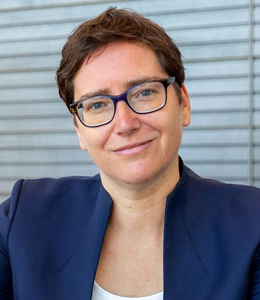
Tamara de Gruyter is the president of Wärtsilä Energy Storage, where she leads the company's global efforts to accelerate the transition to a decarbonised energy future.
de Gruyter brings more than 25 years of international leadership experience within Wärtsilä, having held senior roles across the company's Services and Marine businesses. Her career has spanned continents — from serving as managing director of two joint ventures in China to leading operations in Singapore. Upon returning to Europe, she continued to shape Wärtsilä's strategy through multiple vice president positions.
Known for her cross-cultural leadership and deep operational expertise, de Gruyter plays a pivotal role in positioning Wärtsilä Energy Storage at the forefront of the clean energy transformation.