For nearly two decades, behavioral energy efficiency programs have revolved around the ubiquitous Home Energy Report (HER) and have become a staple of utility customer engagement.
However, these paper-based, aggregate mailers were built for a different era of technology and customer expectations. Today, vertical artificial intelligence (AI)—purpose-built for the unique data structures and constraints of the energy sector—is helping utilities elevate legacy models to keep modern customers engaged and satisfied.
AI for better segmentation and targeting
Today, vertical AI is helping energy providers modernize legacy platforms to keep modern customers engaged and satisfied. Unlike generic models trained on broad internet text, energy-specific AI is engineered to separate signal from noise in massive streams of smart meter data. It filters out grid fluctuations to isolate the precise energy "signatures" of individual appliances, such as HVAC cycles, electric vehicle (EV) chargers, or water heaters.
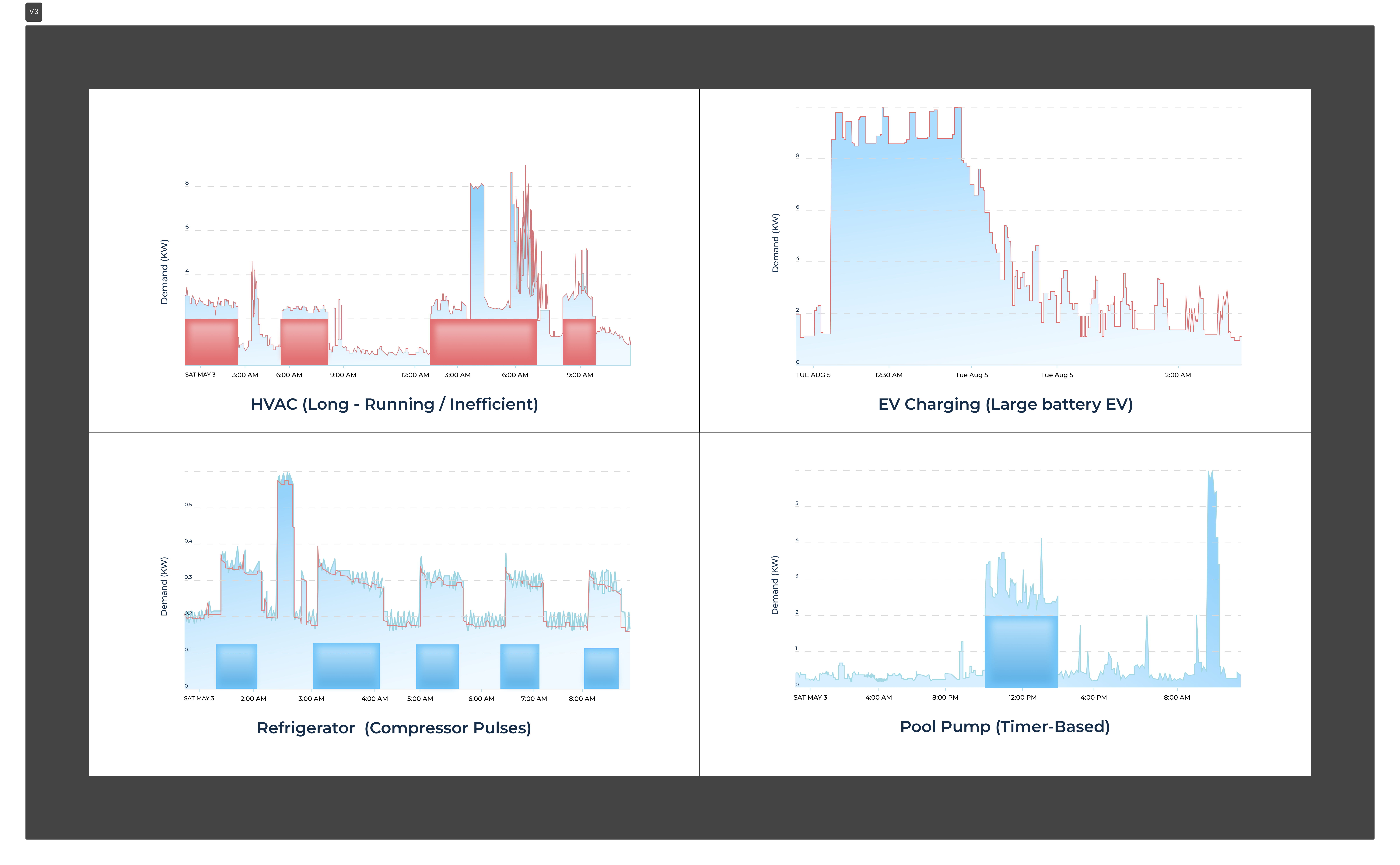
This capability unlocks the next level of performance for legacy HERs and energy efficiency outreach. While traditional programs established a baseline for behavioral efficiency, generalized messaging can only take customer action so far. By refining tools like standard neighbor-to-neighbor comparisons (which often paired mismatched households, like a family of five next to a retired couple), vertical AI allows energy providers to evolve beyond demographic-based data and deliver true personalization.
For instance, by continuously mapping usage data to hyper-specific behavioral archetypes in real time, vertical AI can isolate households charging EVs off-peak or flag homes with inefficient HVAC systems whose degraded cycles signal early equipment failure.
So now, instead of sending broad messages to an entire database, energy providers can deliver heat pump rebate offers exclusively to households where they will have the greatest impact.
Building smarter, adaptive customer journeys
Historically, legacy programs from energy providers have relied on one-way communication. A monthly paper report might alert a customer to high energy consumption, but it can lack clear, personal guidance on how to respond, missing the opportunity to prompt enrollment in a demand response program or an optimized EV charging window.
Today, customer communication must adapt to how people actually live. Forward-thinking energy providers are using AI to support two-way engagement and build predictive customer journeys that intercept friction long before it hits a mailbox.
If a home’s energy use is pacing significantly higher than normal, the system fires off a proactive high-bill alert mid-month, giving the family a real-time heads-up—and a crucial window to adjust their thermostat—before a budget-breaking bill arrives. Energy providers can pair this alert with a tailored solution based on the home's unique appliance profile. With a single tap, a customer can enroll in a Time-of-Use rate safety net or transition into an affordability program, for example, turning potential anxiety into an empowering experience.
Equipping workforces and educating customers
To bring targeted segments and adaptive journeys to life, customer-facing operational excellence must matter just as much as the underlying algorithm.
For decades, standard energy bills haven't delivered visibility into the factors driving that month’s total cost. AI platforms provide that missing transparency, breaking down a monthly total into a clear, appliance-level view of exactly what was spent on refrigeration, laundry, or space heating.
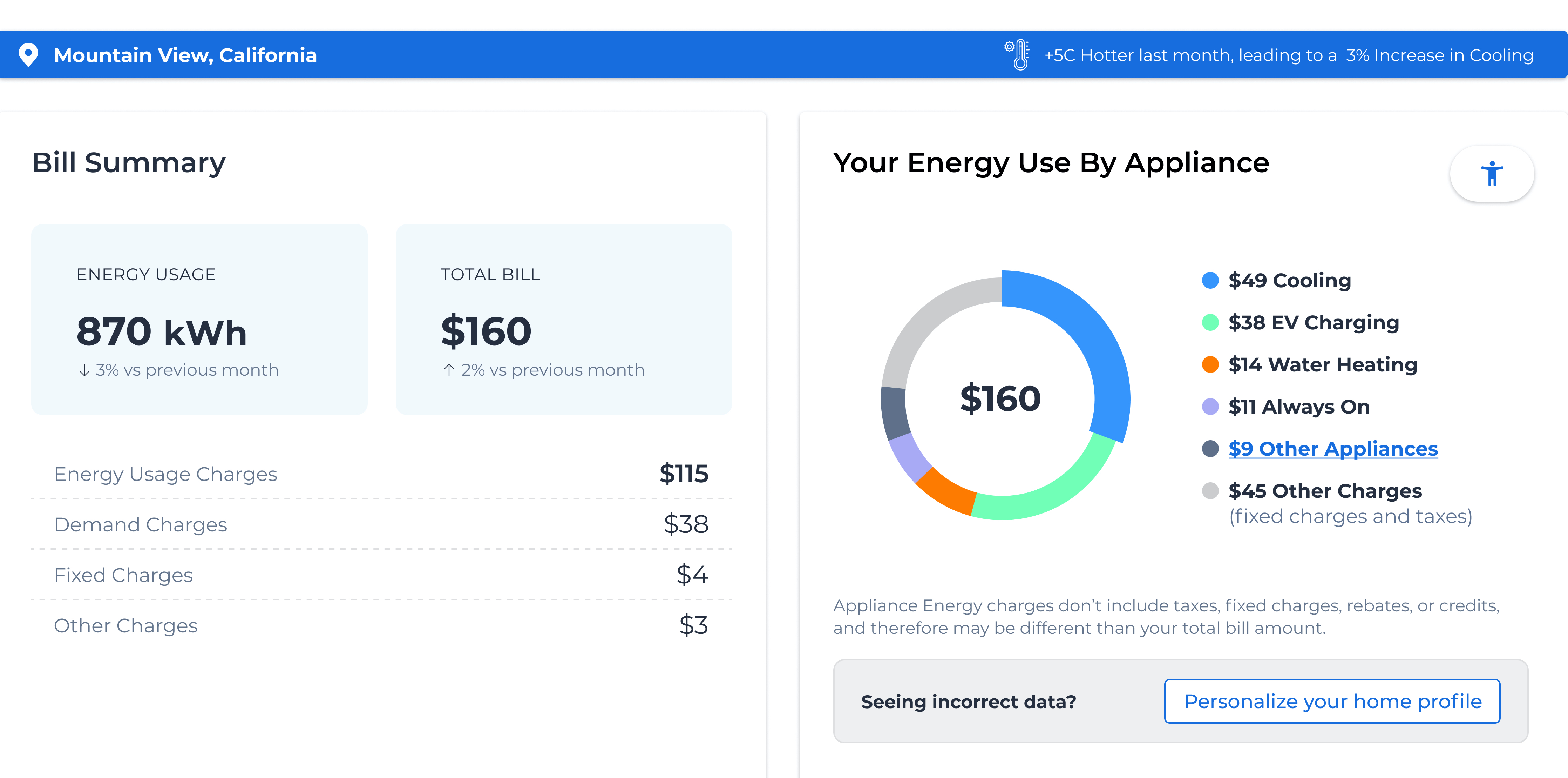
This transparency shifts the dynamic from a lack of information to education, helping customers understand their habits and naturally preventing high-bill phone calls before they happen. When a customer does call, the conversation is faster and more productive because both the caller and the customer service representative (CSR) look at the same itemized data. This enables instant root-cause analysis, allowing a CSR to quickly explain that a specific $40 spike was driven by increased cooling cycles during a mid-month heatwave.
Driving measurable, scalable impact
The evolution from one-size-fits-all outreach to AI-driven segmentation and targeting enables energy providers to build cohesive, multi-layered customer experiences that drive meaningful efficiency in an era of explosive energy demand.
Energy providers will see this come to life across entire service territories, where hyper-personalized touchpoints can, for example, instantly route a customer with poor home insulation to a weatherization assistance program, or offer variable-speed rebates to households running outdated, high-draw pool pumps. As real-time relevance replaces mass-broadcasting, providers are doing much more than sending better reports; they are building a responsive, dual-sided grid where data-driven customer action directly strengthens operational resilience.
 Gautam Aggarwal serves as president & Chief Revenue Officer at Bidgely, leading global sales, marketing and revenue strategy. With over 25 years of experience in enterprise technology, he has held leadership roles at FireEye, Cisco and Barracuda Networks. Aggarwal specializes in building high-performing go-to-market teams and driving revenue growth in complex B2B environments.