The grid already has millions of distributed energy resources. The next investment priority is the layer that lets them work together, get paid and act as a coordinated system.
Utilities are entering one of the largest infrastructure investment cycles in decades as electricity demand rises. AI, data centers, electrification and increasingly severe weather are putting greater pressure on utilities to maintain reliability while serving more load. Gartner forecasts global data center electricity consumption will rise 26% this year to 565 TWh, while AI-optimized servers are expected to consume more electricity than conventional servers by 2027. Recent heatwaves and widespread outages across the US have reinforced just how urgent that challenge has become.
To meet rising demand, utilities have focused on expanding generation, strengthening transmission and deploying more storage. Those investments remain essential. But they require significant capital and years to deliver, and they are only part of the answer. The cheapest flexibility on the grid is already connected. Connected doesn’t mean coordinated.
Across the US, millions of distributed energy resources, including rooftop solar, battery storage, electric vehicles and flexible loads, are already connected to the grid. Together, they represent an enormous source of flexibility that is largely idle. Research from The Pew Charitable Trusts suggests that virtual power plants could meet peak demand at 40% to 60% of the cost of traditional infrastructure investments when these resources are fully engaged.
Over the past decade, connecting distributed energy resources to the grid has been one of the industry's greatest accomplishments. Having spent much of my career helping put the first residential storage batteries onto the grid, I can say plainly: connection was never the hard part. The hard part is what comes after. An asset that is connected but never called, or called and then reconciled 30 days to four months later, is not participating in anything. It is a passive meter with a network connection.
Unlocking real value depends on coordination that enables distributed resources to respond when the grid needs them, rather than simply staying connected. Utilities need visibility into when assets are available, confidence they'll respond when dispatched, and critically, a reason for the asset owner to say yes. Many flexibility programs still run on delayed incentives, fragmented communications and operational processes built for a slower, more centralized system. Settlement is the missing layer.
Here is the part the industry has largely skipped. Coordination is not just a control problem. It is a market problem.
A distributed resource becomes a reliable grid participant only when responding to a grid event is worthwhile, and worthwhile now, not next month on a utility bill. When a battery discharges or an EV pauses charging during a peak, or activates during oversupply, the value of that action decays if the incentive arrives as a delayed credit buried in a statement. The behavior you want is the behavior you pay for, promptly and predictably. Everything upstream – the telemetry, the dispatch logic, the enrolment only produces coordinated behavior if the settlement underneath it actually closes the loop.
This is a familiar pattern. Payment networks did not win because they built better card terminals; they won by creating the real-time settlement rail that made an entire economy of participants worth activating. The grid is approaching the same threshold. The generation and transmission investments will continue, as they must. But the flexibility already sitting on the distribution system will stay underutilized until the operational and financial infrastructure beneath it can measure a response, verify it and settle it in something close to real time.
The next phase of grid modernization
The next decade of grid investment will be defined both by how many resources we connect and by whether we can coordinate the ones already there. That means treating distributed energy resources as what they can be: dispatchable, accountable and compensated market participants, rather than connected assets we hope will respond. Millions of distributed energy resources are already connected to the grid.
As utilities plan the next cycle of investment, the systems that make distributed energy participate reliably and pay for it in real time deserve a place alongside generation, transmission and storage. That is the layer that turns millions of connected devices into a coordinated grid.
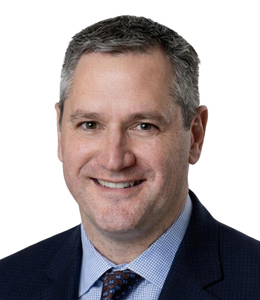
Michael Grasso is the founder and CEO of Grid Rails. Grasso brings experience from previous roles at Sunnova Energy and Just Energy. Grasso holds a Master of Science in telecommunications management from Washington University in St. Louis.